If you have ever used the terms STI and STD interchangeably, you are not alone — most people do. But there is a meaningful clinical distinction between the two, and understanding it can change how you think about sexual health, testing, and treatment.
The shift from “STD” to “STI” in medical and public health language is not just a rebranding exercise. It reflects a more precise understanding of how infections work in the body and how stigma affects whether people seek care. In this article, you will learn exactly what separates an STI from an STD, why the terminology changed, and what it means for how you approach testing and treatment.
What Is an STD?
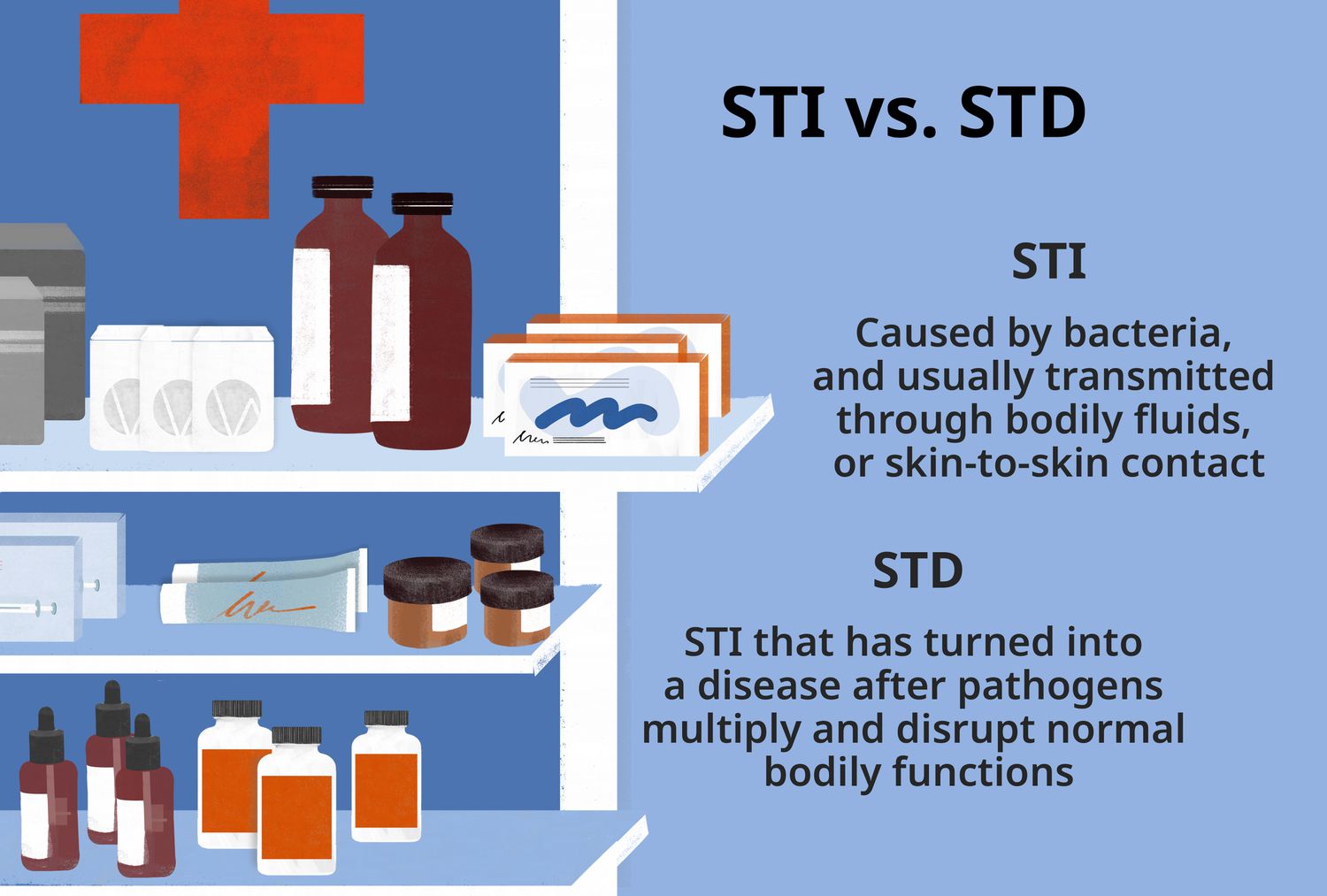
STD stands for sexually transmitted disease. For decades, this was the standard term used by healthcare providers, public health agencies, and the general public to describe infections passed through sexual contact. The word “disease” carries a specific meaning in medicine: it implies that the infection has progressed to a point where it is causing noticeable signs, symptoms, or measurable harm to the body.
A disease, by clinical definition, disrupts normal bodily function. When applied to sexual health, the term STD technically describes a condition that has moved beyond the infection stage and is actively producing symptoms — whether that means genital sores, discharge, pain, or longer-term complications affecting organs and systems.
Important Note: The term “STD” is still widely used in everyday conversation and in older medical literature. Seeing it in a pamphlet or on a clinic sign does not mean the information is outdated — it simply reflects how long it takes for terminology to shift across institutions.
For many years, the distinction between infection and disease was not considered clinically important enough to warrant separate terminology. That has changed as researchers and public health professionals have come to better understand the full spectrum of how sexually transmitted pathogens behave — particularly in people who carry and transmit them without ever developing symptoms.
What Is an STI?
STI stands for sexually transmitted infection. This is the term now preferred by the World Health Organization, the CDC, and most major medical bodies. An STI refers to any infection transmitted through sexual contact — including vaginal, anal, and oral sex, as well as skin-to-skin genital contact in some cases.
The key distinction is that an STI does not have to cause symptoms. A person can carry a sexually transmitted infection, transmit it to a partner, and never experience any noticeable signs of illness. This is true of several of the most common infections, including chlamydia, gonorrhea, and herpes simplex virus.
According to the Centers for Disease Control and Prevention, millions of new sexually transmitted infections are diagnosed in the United States each year, and a substantial portion of those are asymptomatic at the time of diagnosis. This is precisely why “infection” is considered the more scientifically accurate term — it captures the full picture of transmission and prevalence without requiring that symptoms be present.
If you are sexually active, understanding that you can have an STI without feeling sick is one of the most important things you can take away from this article. It is the foundation of why routine sexual health screening matters even when you feel completely healthy. Using an At-Home STD Test Kit is one accessible option for getting baseline results between clinical visits.
STI vs STD: The Key Difference
The difference between an STI and an STD comes down to one clinical concept: whether the infection has caused a disease state. Every STD begins as an STI, but not every STI becomes an STD. Think of it as a spectrum rather than two separate categories.
When a pathogen — whether bacterial, viral, or parasitic — enters the body through sexual contact, it establishes an infection. At that stage, it is an STI. If the infection progresses and begins to cause symptoms, tissue damage, or systemic complications, it crosses into what is technically classified as a disease, making it an STD. Many infections never reach that stage, particularly when caught early and treated.
| Feature | STI (Sexually Transmitted Infection) | STD (Sexually Transmitted Disease) |
|---|---|---|
| Symptoms Present | Not required | Yes — defining characteristic |
| Stage of Progression | Early or asymptomatic stage | Advanced or symptomatic stage |
| Transmissibility | Can be transmitted without symptoms | Can be transmitted with or without symptoms |
| Preferred by Medical Bodies | Yes — WHO, CDC, most clinicians | Less preferred in clinical settings |
| Public Familiarity | Growing, but still developing | High — long-established term |
According to Cleveland Clinic, the practical takeaway is straightforward: STI is the broader, more inclusive term. It covers both asymptomatic infections and those that have developed into a disease state. STD is a subset — specifically the cases where symptoms and disease have emerged.
Key Insight: All STDs are STIs, but not all STIs are STDs. An STI becomes an STD only when it causes disease-level symptoms or damage. This distinction is why “STI” is now considered the more clinically precise term.
Why the Terminology Changed
The shift from STD to STI did not happen overnight. It has been a gradual transition driven by two parallel forces: scientific accuracy and public health strategy.
From a scientific standpoint, the older terminology was simply imprecise. Calling an asymptomatic chlamydia infection a “disease” was technically incorrect — no disease state had occurred. As testing became more sophisticated and clinicians began identifying infections earlier, the gap between “infection” and “disease” became harder to ignore. The term STI better reflects what is actually happening in the body at the point of detection.
From a public health standpoint, language matters enormously. Research has consistently shown that stigma is one of the primary barriers to sexual health screening. The word “disease” carries weight — it implies something visibly wrong, something shameful, something that marks a person. As Tulane University School of Public Health notes, shifting to “infection” language helps reduce that stigma, making it easier for people to seek testing without fear of judgment.
There is also a practical effect: when people are less afraid of the label, they are more likely to get tested, disclose their status to partners, and follow through with treatment. That behavior change has real consequences for transmission rates at the population level. A Sexual Health Education Book can be a useful resource for deepening your understanding of how terminology, stigma, and healthcare access intersect.
Organizations like the WHO and CDC formally adopted “STI” in their official communications over the past two decades, and most medical schools, clinical guidelines, and public health curricula have followed. The change is not yet universal — you will still see “STD” on older signage, in legislation, and in casual conversation — but the direction of travel in clinical settings is clear.
Common Examples: STIs That May or May Not Become STDs
Understanding the STI-to-STD spectrum becomes clearer when you look at specific infections and how they behave across different individuals and stages of progression.
Chlamydia is one of the most commonly reported bacterial STIs in the United States. Caused by the bacterium Chlamydia trachomatis, it is often entirely asymptomatic — meaning many people who carry it never develop a disease state at all. When left untreated, however, it can progress to pelvic inflammatory disease (PID) in people with a uterus, or epididymitis in people with testes, both of which represent genuine disease states. Early detection and a short course of antibiotics typically clear the infection before it reaches that point.
Gonorrhea, caused by the bacterium Neisseria gonorrhoeae, follows a similar pattern. Many infections are asymptomatic, particularly in people with a vagina. When symptoms do appear — burning urination, discharge, or pelvic pain — the infection has moved into disease territory. Untreated gonorrhea can lead to serious reproductive complications and, in rare cases, disseminated gonococcal infection affecting joints and skin.
Herpes simplex virus (HSV), specifically Herpes simplex virus types 1 and 2, illustrates the STI/STD distinction particularly well. A large proportion of people infected with HSV-2 — the type most commonly associated with genital herpes — never experience a recognizable outbreak. They carry the virus (an STI) but never develop the symptomatic disease state (an STD). Those who do experience outbreaks have crossed into STD territory during those episodes, though the virus remains dormant between flare-ups.
Human papillomavirus (HPV), caused by Human papillomavirus, is the most common sexually transmitted infection globally. Most HPV infections clear on their own without causing any symptoms or disease. Certain high-risk strains, however, can progress to cervical, anal, or oropharyngeal cancers — a clear disease state. Low-risk strains may cause genital warts, which are symptomatic but not cancerous. Regular Pap smears and HPV testing are designed to catch high-risk strains before they progress.
Syphilis, caused by the bacterium Treponema pallidum, is notable because it progresses through distinct stages. In the primary stage, a painless sore (chancre) appears — technically a disease state. If untreated, it moves through secondary and latent stages, during which symptoms may disappear entirely (back to an asymptomatic infection stage) before potentially re-emerging as tertiary syphilis with severe systemic complications.
Pro Tip: Using barrier methods like condoms consistently and correctly significantly reduces your risk of acquiring most STIs. A Condom Variety Pack makes it easier to find what works best for you and your partner.
HIV (human immunodeficiency virus), the virus that causes AIDS, is another example where the STI/STD distinction is clinically meaningful. HIV infection itself is the STI. AIDS — Acquired Immunodeficiency Syndrome — is the disease state that develops when HIV has severely compromised the immune system. With modern antiretroviral therapy, many people living with HIV never progress to AIDS, meaning they carry the infection without developing the disease.
Which Term Should You Use?
In clinical and public health settings, “STI” is now the preferred term, and defaulting to it is generally the more accurate and considerate choice. When you are speaking with a healthcare provider, reading current medical literature, or discussing sexual health in an educational context, using “STI” signals that you understand the distinction and are engaging with up-to-date terminology.
That said, “STD” is not wrong in everyday conversation, and correcting someone for using it is rarely helpful. The two terms are used interchangeably by most people, and the overlap in meaning is genuine — all STDs are STIs, so using either term usually conveys the right general concept.
Where the distinction becomes practically important is in how you think about your own health. If you are waiting for symptoms before getting tested, you may be operating under an “STD mindset” — assuming that no disease means no infection. The shift to STI thinking means recognizing that infection can be present and transmissible long before any disease develops. As Healthline notes, this framing is one of the reasons public health professionals advocate for routine screening rather than symptom-prompted testing.
For healthcare providers and educators, using “STI” consistently also sends a signal to patients that they are in a non-judgmental space — which research suggests increases the likelihood that patients will disclose relevant information and follow through with care recommendations. If you are in a role where you discuss sexual health with others, the language you choose has a measurable impact on the conversation.
How STIs and STDs Are Tested and Treated
Testing for sexually transmitted infections does not look the same across all pathogens. The type of test you need depends on which infections you are screening for, your recent sexual history, and any symptoms you may be experiencing. This is why a general physical exam is not the same as a sexual health screening — you typically need to ask specifically for STI testing.
Common testing methods include urine samples for chlamydia and gonorrhea, blood tests for HIV, syphilis, and hepatitis B and C, swabs from the throat, genitals, or rectum for bacterial infections and herpes, and Pap smears combined with HPV testing for cervical cancer screening. Some clinics offer comprehensive panels that screen for multiple infections in a single visit, which is the most efficient approach if you want a thorough baseline. Walk-In Lab outlines the range of available panels and what each one covers.
At-home testing has become increasingly accessible and accurate for several common STIs. These kits typically involve a urine sample, blood spot collection, or swab that you send to a certified laboratory, with results delivered digitally. They are a practical option for people who prefer privacy or have limited access to clinical care, though a positive result should always be followed up with a healthcare provider for confirmation and treatment planning.
Pro Tip: Supporting vaginal microbiome health is one component of overall sexual wellness. A Vaginal Probiotics Supplement may help maintain healthy bacterial balance, though it does not prevent or treat STIs and is not a substitute for testing or medical care.
Treatment depends entirely on the type of pathogen involved. Bacterial STIs — including chlamydia, gonorrhea, and syphilis — are treatable with antibiotics, and when caught early, most resolve completely. It is important to complete the full course of antibiotics even if symptoms disappear, and to abstain from sexual contact until both you and any partners have completed treatment.
Viral STIs, including HIV, herpes, HPV, and hepatitis B, cannot be cured in the same way, but they can be managed effectively. Antiretroviral therapy (ART) allows people living with HIV to maintain an undetectable viral load, which means they cannot transmit the virus to partners — a concept known as Undetectable = Untransmittable (U=U). Antiviral medications for herpes reduce outbreak frequency and transmission risk. HPV vaccines protect against the strains most likely to cause cancer and genital warts, and are recommended for adolescents and young adults before potential exposure.
The Office on Women’s Health recommends that sexually active people discuss their personal risk factors with a provider to determine an appropriate testing schedule — whether that is annually, every three to six months, or at other intervals based on the number of partners and types of sexual activity. Planned Parenthood also provides accessible guidance on when and how to get tested based on your specific situation.
FAQs
Is an STI more serious than an STD, or less serious?
Neither term indicates severity on its own. An STI refers to any sexually transmitted infection regardless of whether it causes symptoms. An STD specifically refers to an infection that has produced a disease state. In practice, an asymptomatic STI caught early is generally easier to treat than an STD that has had time to progress — but the underlying pathogen determines how serious the condition can become if left untreated.
Can you have an STI without knowing it?
Yes, and this is one of the most important points in sexual health education. Many STIs — including chlamydia, gonorrhea, HPV, and herpes — are frequently asymptomatic. You can carry and transmit these infections without ever feeling sick. This is why routine testing is recommended for sexually active people, regardless of whether symptoms are present.
Do all STIs eventually become STDs?
No. Many STIs resolve on their own or are treated before they cause any disease state. HPV, for example, clears spontaneously in most people without ever causing symptoms or progressing to cancer. Chlamydia treated with antibiotics in its early stages will not progress to pelvic inflammatory disease. Early detection and treatment are the most effective ways to prevent an STI from becoming an STD.
Why do some clinics still use the term STD?
Terminology changes slowly across large institutions. Some clinics, government programs, and public health campaigns still use “STD” because it is the term their patient population recognizes, because their materials predate the terminology shift, or simply because the two terms are widely understood to refer to the same general category of conditions. The clinical preference for “STI” is clear, but the transition is still ongoing in many settings.
How often should you get tested for STIs?
Testing frequency depends on your individual risk factors. The CDC generally recommends annual chlamydia and gonorrhea testing for all sexually active people under 25, and for older adults with new or multiple partners. HIV testing is recommended at least once for all adults between 15 and 65, with more frequent testing for those at higher risk. People with multiple partners or who do not consistently use barrier methods may benefit from testing every three to six months. Speak with a healthcare provider to determine the schedule that makes sense for your situation. You can also review Cleveland Clinic’s overview of STIs and STDs for additional guidance on screening recommendations.
Is it possible to have both an STI and an STD at the same time?
Yes. You can carry multiple sexually transmitted infections simultaneously, and some of those may be in a disease state while others remain asymptomatic. For example, a person might have an active herpes outbreak (an STD episode) while also carrying an asymptomatic chlamydia infection (an STI). Comprehensive testing panels are designed to screen for multiple pathogens at once, which is why they are generally preferred over single-pathogen tests when doing a full sexual health check.